Prepared to travel across the world for treatment, a former Gopher football player and his family find hope in a re-emerging therapy on their home turf.
By Nicole Endres
Nothing could keep Gopher linebacker Peter Westerhaus could keep Gopher linebacker Peter Westerhaus off the football field. Well, almost nothing. Minnesota’s Mr. Football 2010, who as a kid slept in a helmet while cradling a football, had an unrivaled passion and work ethic. But in 2013, a brutal case of ulcerative colitis took him away from the game he loved.

The disease is caused by inflammation that eats away at the lining of the large intestine, resulting in frequent, bloody diarrhea and sometimes extreme abdominal pain. “It’s not pretty,” Westerhaus says. “There were times when I thought nails were coming out from inside of me. I lost my ability to eat and sleep. It took away the basic functions of life, really.”
It also took away his normally upbeat personality, says his mother, Sue Westerhaus. “For about a year, he’d sit in a chair in our living room and look out the window,” she says, “looking at life passing him by.” Ulcerative colitis can be controlled with medication in many cases, but not Pete’s. The linebacker had dropped from 235 pounds to 148 pounds. Desperate to find other options, the family prepared to travel across the world for the right treatment, but their search turned up the possibility of relief in a familiar place: the University of Minnesota.
Finding help—and hope
U gastroenterologist Alexander Khoruts has performed about 300 fecal microbiota transplants (FMTs) at University of Minnesota Medical Center since 2008, primarily for people suffering from treatment-resistant forms of the notorious bacterium Clostridium difficile. Today he’s performing an average of three FMTs per week for C. diff that cannot be cleared with antibiotics.
And he sees much broader potential for the therapy, which essentially restores a healthy composition of microbes in the intestine. It could be used one day, Khoruts believes, to treat obesity, diabetes, eating disorders, autism, and inflammatory bowel diseases such as Crohn’s disease and ulcerative colitis, among other conditions. However, a lot of research needs to be done to optimize the treatment, he says.
The Westerhaus family sought out Khoruts and pleaded their case. He thought carefully about whether FMT-based therapy would help Pete before agreeing to try it. “There were anecdotal reports of this treatment working for ulcerative colitis in the literature, and I felt he deserved to have a chance,” Khoruts says.
A lifeline
So Peter Westerhaus started a series of treatments with antibiotics and infusions of gut microbiota. Each round led to improvements in his disease, but one section of his large intestine just wouldn’t heal. Khoruts and colleague Robert Madoff, a University of Minnesota Medical Center colon and rectal surgeon, feared it could get worse without surgery to remove Westerhaus’ large intestine.
In fact, Peter endured three surgeries—the last of which allows the 22-year-old to live his life free of pain and free of a colostomy bag.
Throughout the process, Khoruts always found time to talk when Westerhaus was struggling. And Khoruts was one of the first people to check in with him after surgery.
“That compassion was one of the hands that held Peter,” says his father, Jon Westerhaus. “Pete is a brave, unbelievably tough human being. It’s hard to put it in perspective. On those very dark, hard, terrible nights, he had a lifeline with Alexander Khoruts.” Because of the intense gratitude they felt for their son’s care, Jon and Sue Westerhaus made a gift to the University of Minnesota Microbiota Therapeutics Program, which aims to advance the science behind FMT. Peter Westerhaus, with his parents’ help, is setting up a nonprofit organization to keep supporting that research.
“We believe fully in what Dr. Khoruts is doing,” Peter Westerhaus says. “Ultimately, we want to help get the ball moving. We want to cure ulcerative colitis and all of the other autoimmune diseases that come along with it.”
Today Peter Westerhaus is back to regular life—almost. Though he won’t be able to play football again, he’s on track to complete his finance degree from the Carlson School of Management in the spring. He went skydiving and surfing in Australia and even completed a triathlon this summer.
“I think, ‘Hey, I was hardly able to get out of a chair a year and a half ago, and here I can go run,’” he says. “It’s like having a new life.”
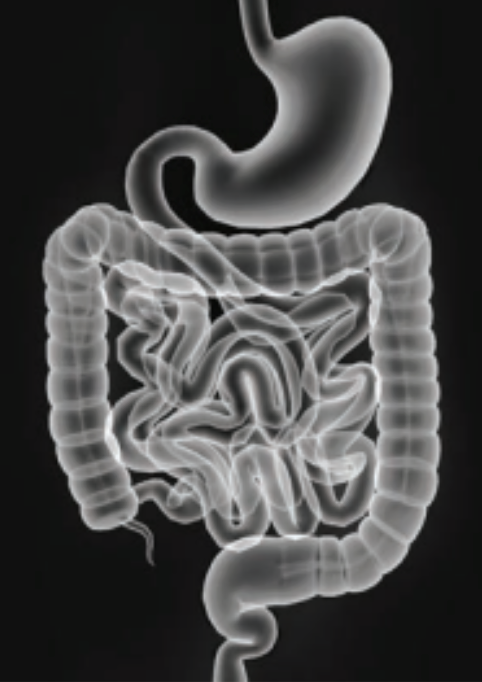
What is Fecal Microbiota Transplantation?
Though the procedure dates back to at least 1958 in Western medicine, fecal microbiota transplantation (FMT) is re-emerging as a therapy with potential to treat a range of challenging conditions. The University of Minnesota is at the forefront of bringing this field into mainstream medicine.
The term “microbiota” refers to the trillions of tiny organisms found in a person’s gastrointestinal tract that help digestion, fight off harmful bacteria, develop the immune system, and maintain general health.
As the name suggests, the helpful microorganisms come from fecal material—donated by volunteers who undergo regular and rigorous health screening at the University. The microbes from the fecal material are separated in the lab and frozen; the rest is discarded. A suspension of microbiota is given to the patient via colonoscope. The U team recently has developed a pill form as well.
Nicole Endres is a contributing editor for Legacy magazine.


.png)

.png)