.jpg)
Thank you so much for your support of Achieving Cures Together. Since 2015, the ACT community has raised over $3.8 million towards microbiota transplant therapy research and treatments. Your partnership has been instrumental in the advancement of this vital field of research: supporting the production of over 65,000 microbiota therapies at the University of Minnesota MicrobiotaTherapeutics Program that have treated over 8,000 patients with recurrent C. difficile infections and used in clinical trials targeting 25 separate health conditions.
Ulcerative Colitis patient, Peggie, shared “what I would say to someone who has been newly diagnosed is, first of all, you are not alone. You’re going to get through this, one step, one day at a time. And with the work that is being done by Achieving Cures Together, you will have better choices.”We’re starting our second decade off strong and remain committed to advancing microbiota research, restoring health and transforming lives one patient at a time. To hear from Peggie and others impacted by ACT’s research, subscribe to ACT’s YouTube, Facebook and Instagram pages.
.jpg)
Achieving Cures Together is hosting our sixth annual Growing Hope fundraiser event on Friday, September 11, 2026. ACT is honored to have keynote speaker, Dr. Richard Bedlack, from Duke University, join us to share his research. Dr. Bedlack is investigating the impact of microbiota transplant therapy in patients with ALS (Amyotrophic Lateral Sclerosis), a progressive neurodegenerative disease that causes patients to lose muscle control. Join us for a delicious and entertaining evening at the decadent Winery of Sovereign Estates, which offers breathtaking views, while supporting vital microbiota transplant therapy research. More details and registration forthcoming!
Corporate Sponsor Opportunities: ACT is launching our new year-round family and corporate sponsorship program. Our sponsors are recognized at ACT events and programs throughout the year including Growing Hope, the Twin Cities Marathon and our educational webinars. Please reach out to us at info@achievingcures.com for more details on how your family or organization can make a lasting impact in patient lives.
Crohn's disease develops due to a disruption between the gut microbiota and the host immune system resulting in excessive inflammation in the intestinal tract. Current drug therapies for Crohn’s disease are directed at the immune system. A new study led by researchers at the University of Minnesota aims to assess if two forms of microbiota transplant therapy capsules can effectively engraft in the small and large intestine of Crohn’s disease patients. This study will explore if microbiota transplant therapy will improve patient symptoms as well as trigger visible changes in endoscopy before and after these two therapies. For more details, visit here.
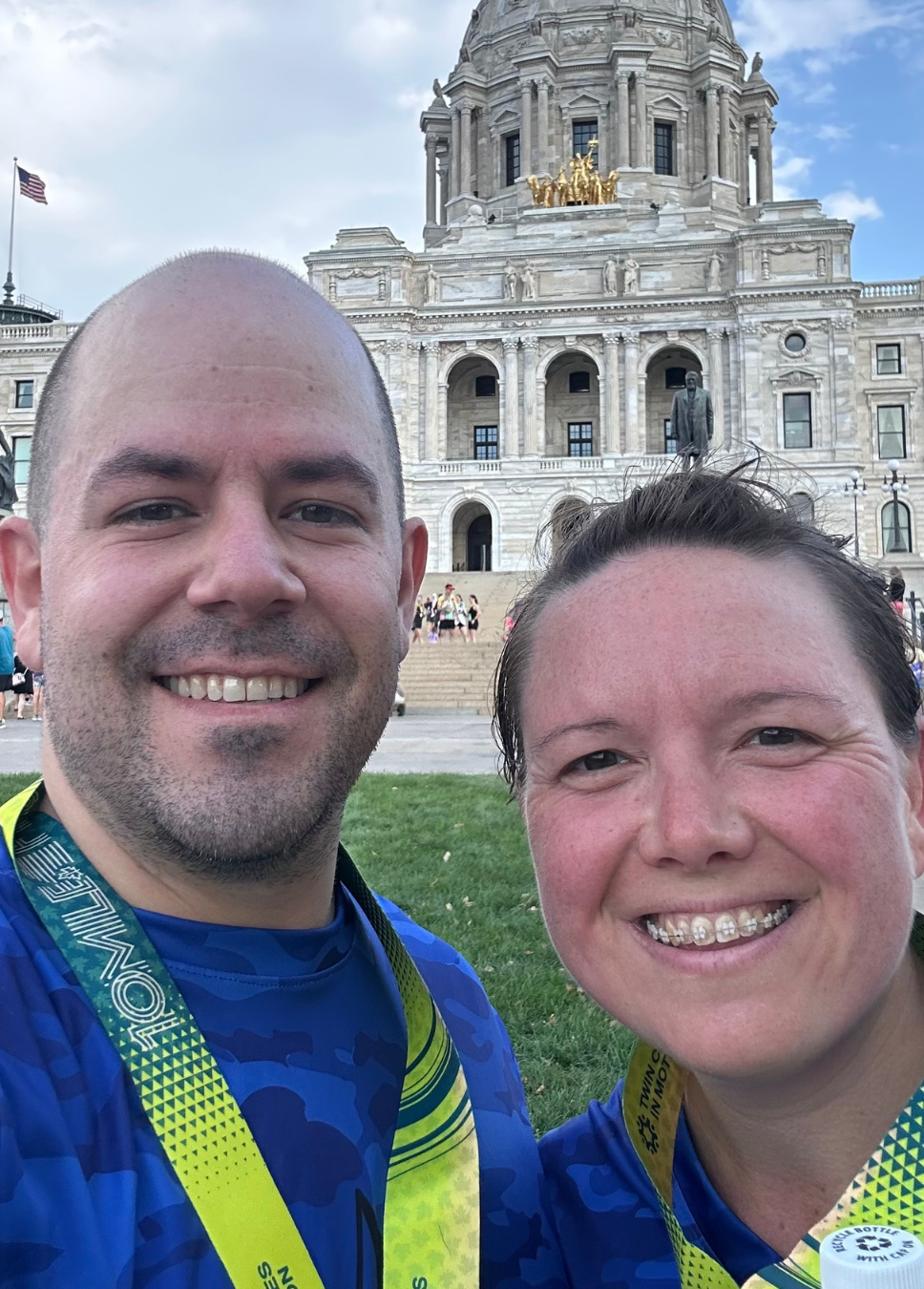
Since 2016, ACT community members have taken strides at the Twin Cities Marathon to advocate and raise funds for microbiome research. We will once again be a charity sponsor at the 2026 Twin Cities Marathon, and we welcome you to join our team! This year we have a new opportunity to invite friends and family to be a part of the race. Any runner who signs up with our Twin Cities Marathon team and inspires the most friends or family members to register for any race distance will receive two complimentary tickets to Growing Hope 2026. This is our way of celebrating the incredible impact you make, not just on the course, but in rallying your community around a shared mission.
Register at: www.achievingcures.com/runnersignup and share with your family and friends. To receive an entry for Growing Hope tickets, ensure your referred runner includes your name in the “How Did You Hear About Us?” question on the form. ACT is looking forward to meeting new faces at the 2026 Twin Cities Marathon weekend!
“I continue to run for ACT because I strongly believe in the mission and impact that ACT brings to microbiome research and cures. I appreciate that ACT is extremely patient-forward and meaningful with their growth and research. It has been encouraging to see the impacts of the clinical trials over the years pertaining to C-Diff, expanding to areas like Autism and Food Allergies. I look forward to learning about what exciting new breakthroughs or solidifying research they had during the last year at the Growing Hope event.”
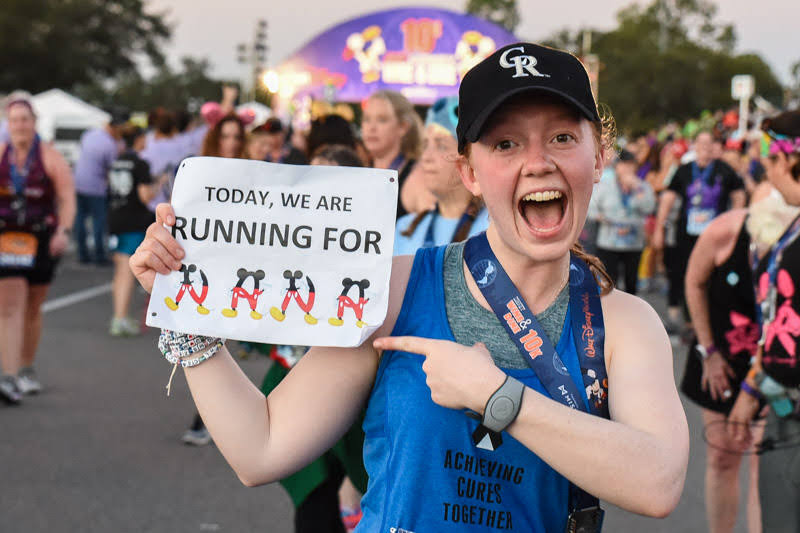
ACT and the Run for Nana team are celebrating our 10th year of running for microbiota transplant therapy and C. difficile treatments. Emily Haller started Running for Nana after the tragic loss of her Grandma Joan to her battle with C. difficile. Over the past decade, Emily has run for a cure for C. difficile in multiple races, including Grandma’s and the Twin Cities Marathons in Minnesota and Disney’s Wine & Dine Marathon in Florida. Emily also rallies the Run for Nana community to run the Colfax Marathon in Denver each year. Emily shared, “It’s been ten (10!) years since I signed up to run a marathon and we started Running for Nana - in celebration of our special, irreplaceable Nana and in dedication to end C. difficile. I am so deeply grateful to every person who has been a part of this community and has been on this journey with us. Whether you have run a race, joined our team, donated, talked about C. diff, or any/all of the above, thank you so very much. Because of you, many people with C. diff are able to enjoy more special time with their loved ones than they may have otherwise - what an immense gift.” There is still time to join ACT and support the Running for Nana team at the Colfax Marathon on May 16-17, 2026. For more details on the race and supporting our runners, visit: achievingcures.com/2026colfaxmarathon.
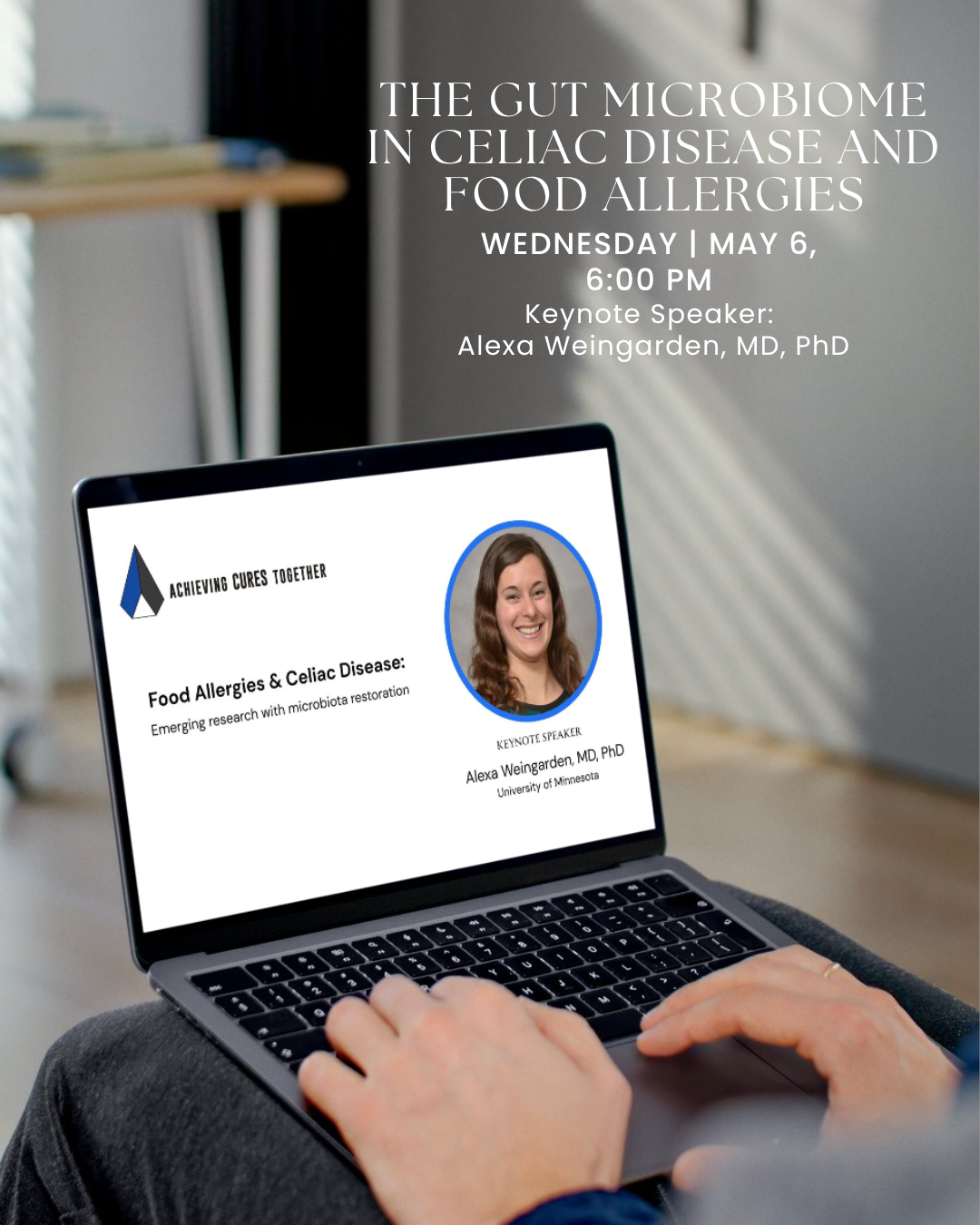
Emerging evidence suggests that changes in the gut microbiome could be connected to the rise in food-related diseases, particularly celiac disease and food allergies. In this complimentary webinar, keynote speaker Dr. Alexa Weingarden, will discuss how the gut microbiome contributes to these diseases and new efforts to
use microbiota-based therapies to treat them. Hear from former NFL quarterback, Rich Gannon on the impact celiac disease has had on his and so many other families. For more details and to register, visit: achievingcures.com/2026allergieswebinar. Interested in participating in a celiac disease clinical trial? Reach out to celiac@umn.edu for more details.
Clostridioides difficile remains the most common cause of healthcare-associated gastrointestinal infections and a difficult clinical challenge. Fighting this disease was foundational to our program and development of fecal microbiota transplants (FMTs). However, despite all the advances over the past decade, challenges persist. One of these is the most severe form of the disease, which is called fulminant C.difficile infection. Patients with fulminant C.difficile infection are critically ill and typically require intensive care in the hospital. It is a major driver of C.difficile-associated mortality, which is approximately 15,000 patients every year. Achieving Cures Together has been our main partner in treating such patients at the University of Minnesota, and we just published our experience over the past year: https://med.umn.edu/news/novel-treatment-protocol-developed-university-minnesota-targets-deadliest-cases-c-difficile-infection
Our analysis of the placebo-controlled microbiota transplant therapy (MTT) clinical trial in ulcerative colitis has generated interesting insights. Clinically, the patients treated with active MTT experienced symptomatic benefit. However, we found little association between the incorporation of donor microbes into the patients’ microbiome and clinical improvement. This result indicates that we must search harder for the mechanism of how MTT works in this disease!
We completed analysis of the first-ever randomized, placebo-controlled trial of MTT in severe autism. The trial was focused on patients with Pitt-Hopkins Syndrome, an ultrarare genetic condition associated with a single gene mutation. These patients are non-verbal and suffer with severe gastrointestinal problems, which generally dominate their daily lives. Remarkably, we saw marked improvements in patients receiving MTT, while only minimal improvements were seen in patients in the placebo group. Patients initially given placebo were then given active MTT, and they improved just like those who received MTT to begin with. This trial suggests that targeting the gut microbiome is a promising strategy even when the cause of the syndrome is clearly genetic. We anticipate the results of this study to be published this year.
Selected highlights from other areas:
• Optimization of Cancer Therapies - New insights in donor selection are coming out of the clinical trials we are supporting at Fred Hutchinson Cancer Center. In particular, donor diet appears to be a strong predictor of benefit in MTT. Trials using MTT in partnership with CAR-T cell therapies (a form of immunotherapy) are also gaining momentum at City of Hope in California.
• Kidney Stones - New insights are emerging on optimal donor selection based on the gut microbiome analysis.
• Advanced Liver Disease - We are using new equipment to investigate which microbial gut communities can benefit patients with hepatic encephalopathy, a major complication of liver cirrhosis. Ultimately, the system may be used to identify the best stool donors and patients most likely to benefit.
Two postdoctoral fellows, Drs. Andrew Sommer and Ram Hari Dahal, have joined our team at the Microbiota Therapeutics Program. Both are absolutely outstanding scientists. Andrew is driving our computational bioinformatics work, while Ram is working to interrogate different microbes at the laboratory bench. Building our in house science team is critical to development of next-generation microbiota-based therapeutics, which can then be tested in clinical trials via our network of translational science investigators across the US. This is what Achieving Cures Together is all about!


.png)

.png)